How Window Seat knows what's flying over you.
A short tour from the aircraft's radio to the screen on your desk.
The aircraft says where it is
Most airliners carry a transponder that broadcasts their position, height, speed and identity by radio, about twice a second. The system is called ADS-B, and the signal is open for anyone to receive.
Receivers on the ground hear it
Thousands of volunteers run small receivers on rooftops and windowsills. Each one hears planes up to a few hundred kilometres away and shares what it hears with open networks.
We pick out your patch of sky
Our server asks those networks for aircraft around the location you set, then looks up each flight's airline and route.
Your screen draws it
Window Seat receives that short list over your Wi-Fi every few seconds and moves each plane smoothly across your map.
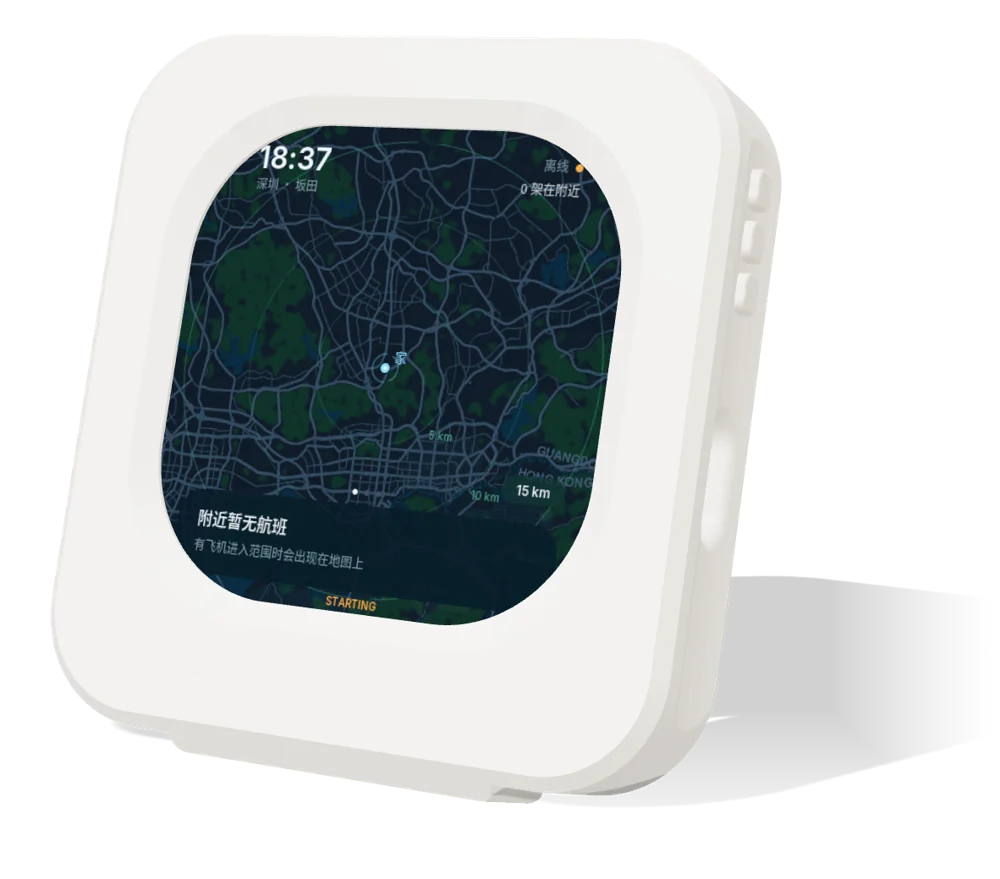
What to expect where you live.
Cities and airports
Coverage is strongest around large cities and airports, where many receivers overlap. Most people near a major airport will see something most of the day.
Quiet or remote areas
If there are few receivers near you, low-flying planes may drop out until a receiver can hear them again. High-altitude jets are heard from much further away.
Not every aircraft
Some military, private and older aircraft don't broadcast ADS-B, or ask for their details to be hidden. Those won't appear, or will appear without a route.
A few seconds behind
Positions reach your screen a few seconds after the plane sends them. Close enough to look up and find it.
Your location stays coarse
The device asks for flights around an area, not your exact address. See our privacy policy.
Not for navigation
Window Seat is for curiosity. Don't use it for flying, safety or anything that depends on complete data.
More questions?
Setup, location, updates and common questions are on the support page.